For many organisations, workplace parking management still sits purely on the facilities team’s to-do list. That’s completely normal; it’s where it’s always lived. However, it increasingly appears to influence more than just facilities alone.
The way a car park is run affects two things that go well beyond the responsibilities of that one team. It shapes how employees feel about their workplace. And it shapes how an organisation performs against its sustainability goals.
Ask any HR manager, and they’ll likely say the same thing: complaints about parking travel fast. A spot that “should have gone to someone else,” a first-come-first-served system that quietly favours whoever gets in earliest, a new starter with no idea where they’re meant to park.
Take the parent who’s just dropped their kids off at school before heading to the office. They’re not late because they’re not trying. They’re late because a “first-come, first-served” car park doesn’t leave room for a school run. Under a system like that, they’ll almost always lose out to a colleague with an easier commute, and that’s not about effort at all.
In Ireland, 91% of car commuters travel alone. In the UK, 55% of working adults say a car is their main way of getting to work. That’s a lot of people relying on parking every single day, and a lot of room for small frustrations to build into bigger ones.
There’s a retention angle here, too. Better commuting options, parking included, can genuinely influence whether people stay. In Ireland, 65% of workers say they’re more likely to stay in a role with better commuting options. That number climbs even higher among younger employees, especially those actively job hunting.
It can also show up as stress, lower focus, and burnout, the kind of thing we’ve looked at before, in our piece on the real cost of a bad commute.
Fair, well-managed parking can quietly become part of the everyday experience, whether or not HR owns it directly
Then there’s the ESG side, which is arguably where parking’s role has changed the most.
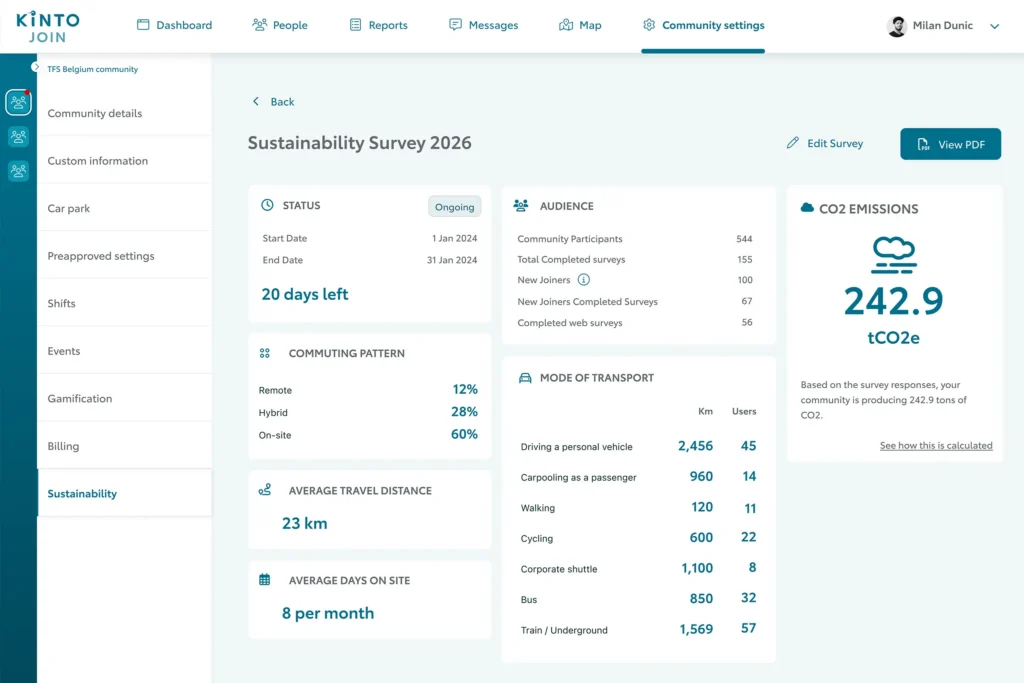
Commuting is part of an organisation’s Scope 3 emissions. For most, it’s one of the biggest parts that’s actually possible to act on. Often, the reason that the footprint isn’t clearer is simply that the data isn’t there yet.
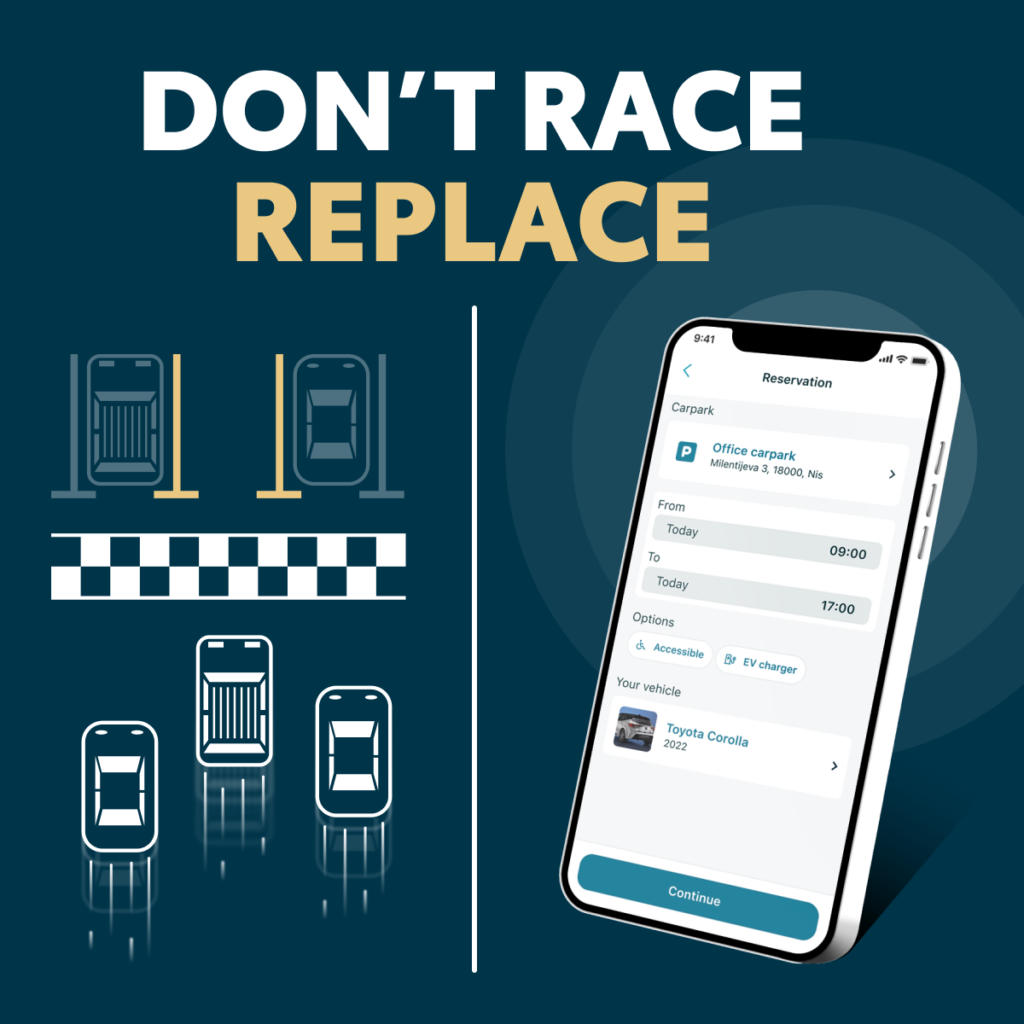
Parking policy plays a role here, too. Who gets a space, whether carpoolers get priority, whether spaces are reserved by default, these small choices add up. They can either encourage more cars on site or nudge people towards sharing rides and greener options.
That can make parking policy a genuine lever for ESG and CSRD reporting, not just a logistics decision. It’s one of the few areas where a small change can produce a measurable shift. Prioritising carpool spaces, or releasing unused reserved spots, are simple examples a sustainability team could actually report on.
None of this takes anything away from facilities. Someone still needs to manage the day-to-day, the spaces, the rules, and the fairness of allocation. That job doesn’t disappear.
What’s changed is where the effects of those decisions land. Employees feel it. HR and sustainability teams increasingly have to answer for it in their own numbers. Parking has quietly become a shared responsibility, even when only one team runs it day to day.
The good news is that solving this rarely means finding new spaces, something we’ve covered in more detail separately in another blog post: How to increase parking capacity without building new spaces.
And this isn’t just a workplace story. Universities face the same pressure, often on an even larger scale, with students competing for limited spaces every day. Many are finding the same approach works just as well there, especially when paired with carpooling, cycling, or walking schemes that ease the pressure on parking altogether.
Whichever team you’re in, HR, sustainability, or facilities, it might be worth a second look, not because anything’s broken, but because because the way parking is managed can have a much wider impact than it first appears.
If you’re not sure exactly where your organisation stands, the easiest place to start is simply understanding your numbers.
Our free Commuting Survey gives you a clear, CSRD-ready picture of how your people actually get to work, and it’s useful for both HR and sustainability teams.
HR gains a clearer understanding of what’s affecting satisfaction and retention, while sustainability receives ready-made data for Scope 3 reporting, all from the same brief survey.
Once you know where you stand, our free Smart Parking Playbook is the natural next step, walking you through exactly how to manage parking smartly, without adding new spaces, and without adding to anyone’s workload.