
If workplace parking feels like a problem that never quite goes away, you’re not alone. For many employers, the challenge is not simply having too few spaces. Parking demand can vary significantly from one day to the next, spaces may be allocated inefficiently, and policies designed for a different way of working may no longer reflect how employees actually commute.
The result is often the same: some employees struggle to find a space, while others remain unused. Parking becomes a source of frustration for employees, an administrative burden for facilities teams, and a missed opportunity to support wider workplace and sustainability goals.
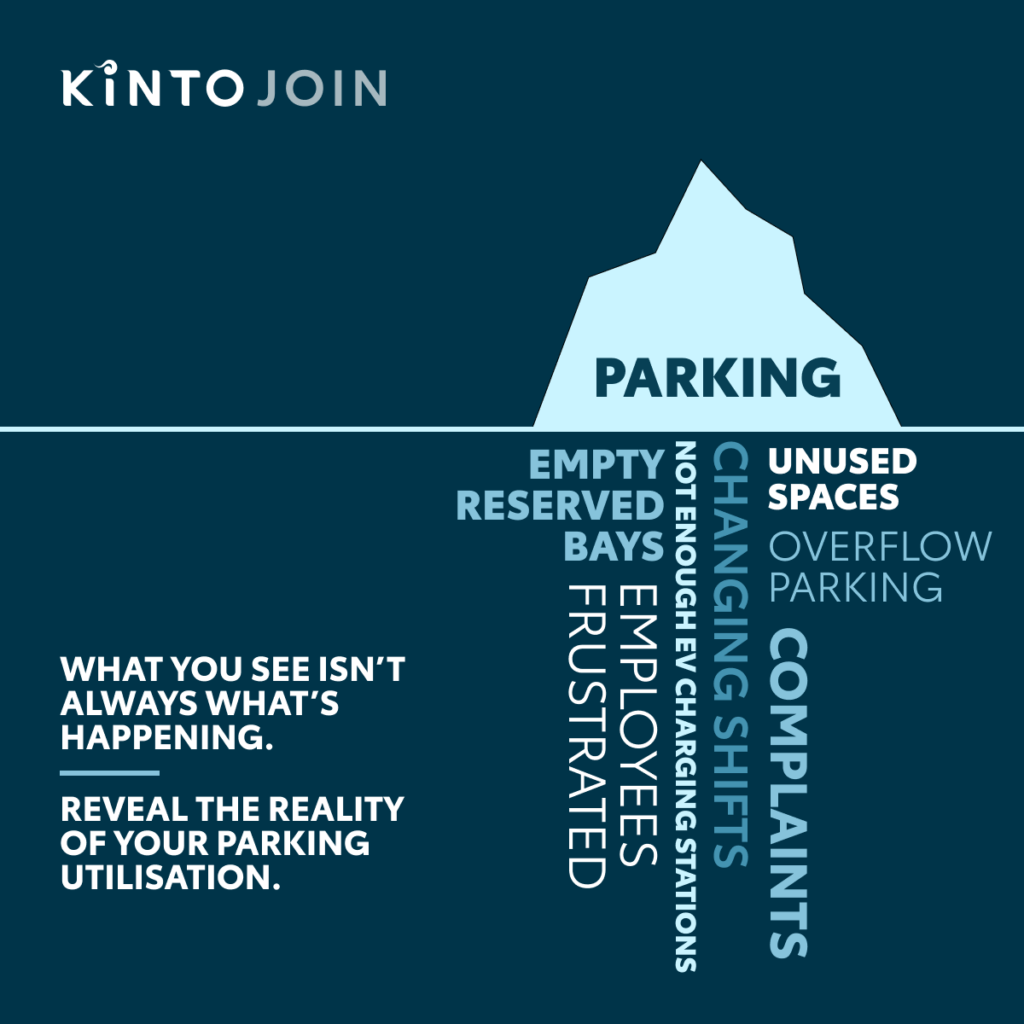
The answer is not necessarily to create more parking. Before making costly changes, it can be useful to understand how parking is actually being used, where demand is coming from, and whether existing policies are helping or creating unnecessary pressure.
There is no single approach that works for every workplace. But from working with organisations facing these challenges, we’ve seen a few practical approaches that can help make parking easier to manage, fairer for employees and more adaptable to changing workplace needs.
Before making changes to a parking policy, it can be useful to build a clearer picture of what is actually happening day to day.
How full is the car park at different times? Are some spaces regularly left unused while others are in high demand? Does demand change significantly between different days of the week?
Even a few weeks of basic observation can reveal patterns that are difficult to see when parking issues are mainly being discussed through individual complaints or anecdotal feedback. The more accurate the picture of current demand, the easier it becomes to identify where changes might genuinely help.
Try to understand when and where pressure occurs before assuming that additional capacity is the answer
Rather than focusing exclusively on managing who gets a parking space, some organisations are also exploring how parking policies can support other ways of commuting.
For example, priority access, incentives or other benefits for carpoolers can make shared travel more attractive while also helping to reduce pressure on available parking. The same principle can apply to wider sustainable travel initiatives.
This does not mean that every organisation needs to introduce a complex reward programme. But parking policy can be one of several ways to make alternative commuting options more visible and easier to choose.
Consider whether your current parking policy unintentionally makes driving alone the easiest option
Parking allocation can become particularly difficult when the available spaces are not enough to meet peak demand.
A first-come, first-served system may appear simple, but it does not necessarily work equally well for everyone. Someone with caring responsibilities or a long commute, for example, may not be able to arrive early simply to secure a parking space.
Some organisations therefore choose to consider factors such as carpooling, accessibility needs, operational requirements or other specific circumstances when developing their policies.
There is no single formula for deciding what is fair. What tends to matter most is that the criteria are clear, transparent and applied consistently, so employees understand how decisions are made.
Review whether your current allocation system reflects the needs of your workforce — or simply rewards whoever gets there first
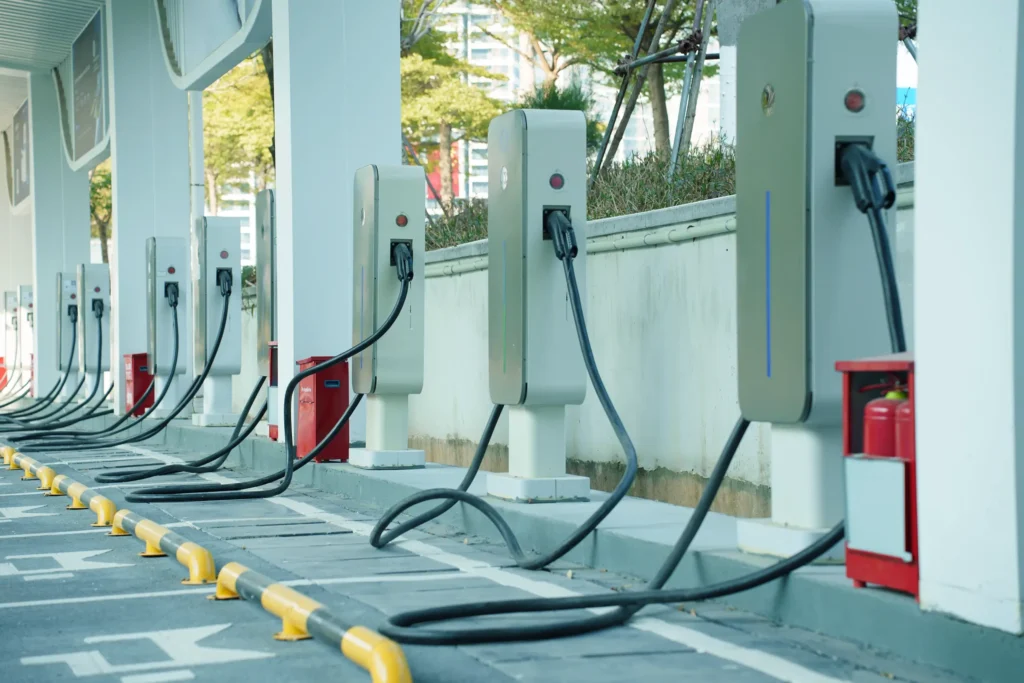
EV charging is becoming an increasingly important part of workplace parking planning, but it can also create a new set of practical challenges.
The issue is not only how many chargers are available. It is also how access is managed. A fully charged vehicle remaining in a charging bay for the rest of the day can prevent another employee from using it, while limited charging capacity may make it difficult to meet everyone’s needs.
As organisations plan for increasing EV adoption, it may be worth considering how charging access, booking rules and parking policies work together.
Think about how your current charging setup would work if demand increased significantly
Parking policies can look perfectly reasonable from an administrative perspective while creating daily frustrations for employees.
A short survey or regular feedback exercise can help uncover issues that may not be visible through occupancy data alone. It can also help provide a clearer picture of how people currently commute and what barriers they face.
This kind of information can be useful beyond parking. If changes to workplace travel or parking require investment or leadership support, real employee data can help make the case more effectively than assumptions or isolated feedback.
KINTO Join’s FREE Commuting Survey can help organisations gather this type of information and build a clearer picture of how their teams travel to work.
Ask employees about their actual experience of commuting and parking before designing solutions around assumptions
For organisations with hybrid or staggered working patterns, it may also be worth looking at when people come into the workplace—not just how many people come in.
If large numbers of employees are expected on-site on the same days, parking demand can become particularly difficult to manage. Where there is some flexibility, coordinating attendance across teams may help spread demand more evenly.
This is not always possible, of course. But understanding the relationship between attendance patterns and parking demand can reveal opportunities that are easy to miss when the two are managed separately.
Compare your busiest parking days with office attendance patterns to see whether demand could be spread more evenly.
It can also help to think about parking spaces according to their purpose rather than treating every bay as interchangeable.
Visitor spaces, accessible parking, carpool spaces, EV charging bays and general parking all serve different needs. Clearly defining and communicating how these spaces are intended to be used can make the system easier to understand and manage.
It can also make future planning easier, as organisations have a clearer picture of how their available capacity is being used.
Create a clear overview of your different types of parking spaces and how each is intended to be used
Many organisations already use access control, number plate recognition or other systems connected to their sites.
When making changes to parking management, it is worth considering how new processes will work alongside existing infrastructure. A solution that creates another disconnected system may solve one problem while creating additional administrative work elsewhere.
Where possible, connecting parking management with systems already in use can make the overall experience simpler for both administrators and employees.
Review how any new parking process would work alongside the systems you already use to manage your sit.
Manual processes are often a perfectly reasonable place to start. For smaller sites or relatively stable demand, a spreadsheet may be all that is needed.
But as demand grows, parking policies become more complex or hybrid working creates greater variation, manual tracking can become increasingly difficult to maintain.
This is often the point at which organisations begin looking at dedicated parking management tools. Features such as live occupancy visibility, waiting lists, flexible allocation rules and EV charging booking can help reduce some of the administration involved in managing demand.
For organisations looking to move beyond manual parking management, dedicated tools can provide greater visibility and flexibility. Here’s a short look at how KINTO Join supports workplace parking management:
There is no single parking policy that will work for every organisation. The right approach will depend on factors such as the size of your workforce, the available space, commuting patterns and the way your workplace operates.
For some organisations, the first step may simply be to understand demand more clearly. For others, the priority may be reviewing allocation policies, preparing for increased EV adoption or reducing the amount of manual administration involved.
The important thing is to start with a clear understanding of the challenges you are actually trying to solve. From there, even relatively small changes can help make workplace parking easier to manage, fairer for employees and better aligned with wider workplace and sustainability goals.
If you would like to explore the topic in more detail, our Smart Parking Playbook looks at practical ways organisations can reduce parking pressure and make better use of their existing capacity.