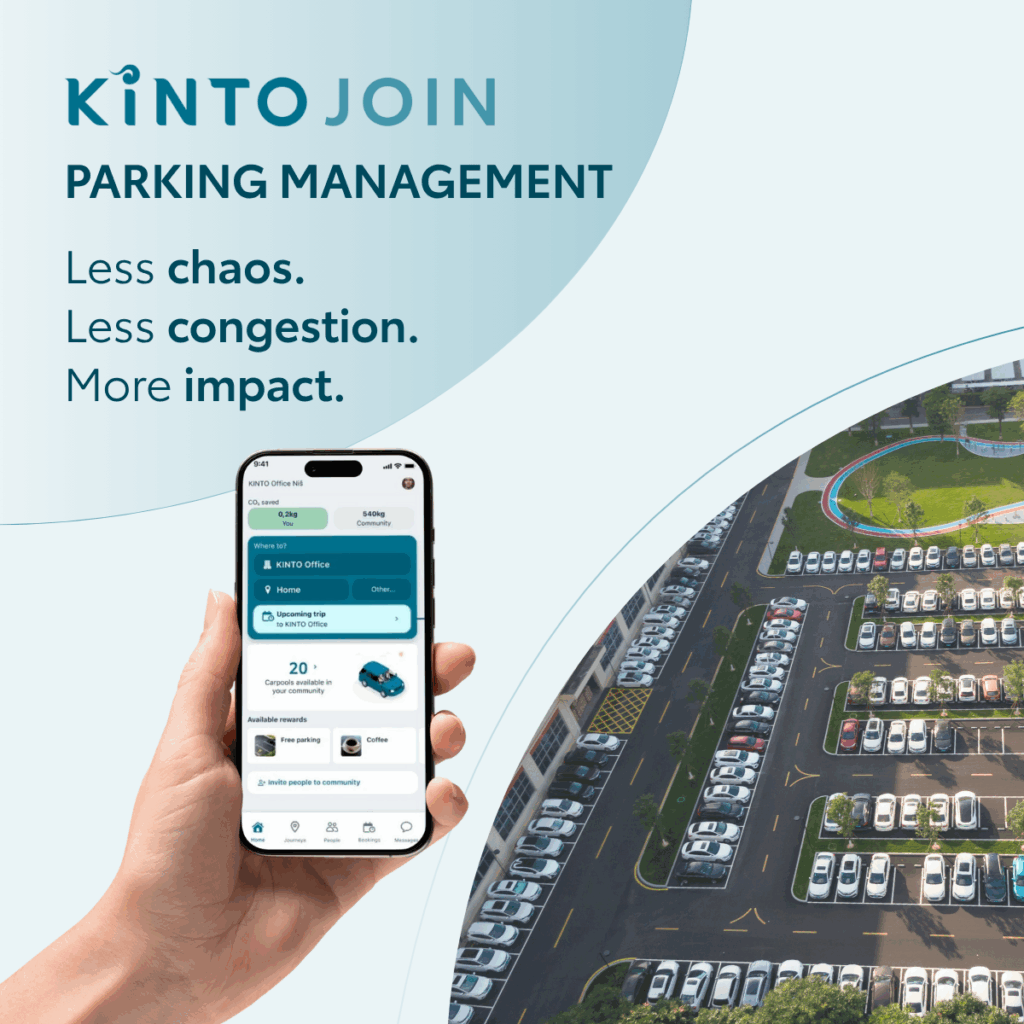
Even in 2025, many company car parks still use first-come, first-served parking management systems, a method that increasingly shows its cracks. You’ll find full lots, frustrated drivers, and large reserved sections sitting empty.
The way most companies have managed parking for years simply doesn’t fit how we work today. What worked when everyone arrived at 9 a.m. and left at 5 p.m. no longer makes sense in a world of hybrid schedules, flexible hours, and growing sustainability expectations. Traditional parking management fails to adapt to how people want (and need) to travel today.
Over the next sections, we’ll examine:
Most workplace car parks still run on the same outdated logic:
Here’s the problem:
Traditional parking systems were built for a world that doesn’t exist anymore.
In the past, first-come, first-served and reserved spots for senior staff might have made sense. But today, that approach creates more problems than it solves.
Here’s why:
The result? A system that’s inefficient, unfair, and out of sync with how modern organisations operate.
Smart parking management in 2025 isn’t about squeezing more cars into the same space — it’s about reducing demand, using space more efficiently, and aligning with your company’s sustainability and people goals.
Modern parking management isn’t about checking who parked where; it’s about designing a fairer, smarter, and greener system that actually fits how people work today.
Instead of wasting time and space, smart parking management focuses on three big wins:
In traditional systems, “reserved” or premium spots often sit empty when those employees are off-site or working from home. Smart systems change that.
Dynamic allocation allows those unused spaces to automatically become available to others. That means no more empty VIP spots, and more room for everyone without expanding your car park or pouring another layer of concrete.
If your organisation runs on shifts or flexible schedules, like universities, hospitals, or manufacturing sites, your parking management system needs to keep up. Static, permanently reserved spaces don’t work in a world of rotating teams and changing hours. A smart parking system that adapts in real time helps ensure every space is used efficiently, reduces frustration, and makes parking fairer for everyone.
A smart parking management system uses real-time data and digital tools to make parking fairer, greener, and more efficient. Employees can see availability and book spots directly through an app, reducing daily stress and creating transparency.
Smart parking management allows companies to set smart rules that reflect their values – giving priority to carpoolers, shuttles, electric-vehicle drivers, or those with accessibility needs.
The smartest systems don’t just manage cars, they help reduce them. By giving priority parking to people choosing greener modes of transport, companies can actively shift behaviour.
When parking privileges are tied to sustainable choices, people naturally start changing how they commute. It’s a simple but powerful way to cut emissions and congestion without mandating rules or restrictions, and help meet sustainability and ESG goals.
Smart parking tools bring everything online.
Employees can book spaces in advance through an app, see real-time availability, and avoid the daily parking lottery.
Facilities teams, on the other hand, get a clear overview of usage data – who parked, when, and where, which helps optimise capacity and reduce conflict.
And perhaps most importantly, smart parking aligns with your organisation’s ESG goals. It’s a tangible, visible action that reduces emissions, supports inclusion, and improves the everyday experience of your people.
Modern parking management isn’t about fitting more cars into the same lot; it’s about creating a system that works smarter for everyone – your people, your budget, and the planet.
If all this sounds like the parking system your workplace needs, the good news is that these solutions already exist. Platforms like KINTO Join make it easy to bring smart parking management to life. Through one integrated digital system, you can:
By aligning parking access with your sustainability goals, you reduce congestion, lower costs, and make commuting smoother for everyone. KINTO Join helps companies do all this while supporting greener commuting options like carpooling, cycling, and public transport – turning parking from a daily headache into a tool for progress.
Ready to see how it works in practice?
Book a free call and discover how KINTO Join can help your organisation simplify parking, cut emissions, and make mornings smoother for everyone.